
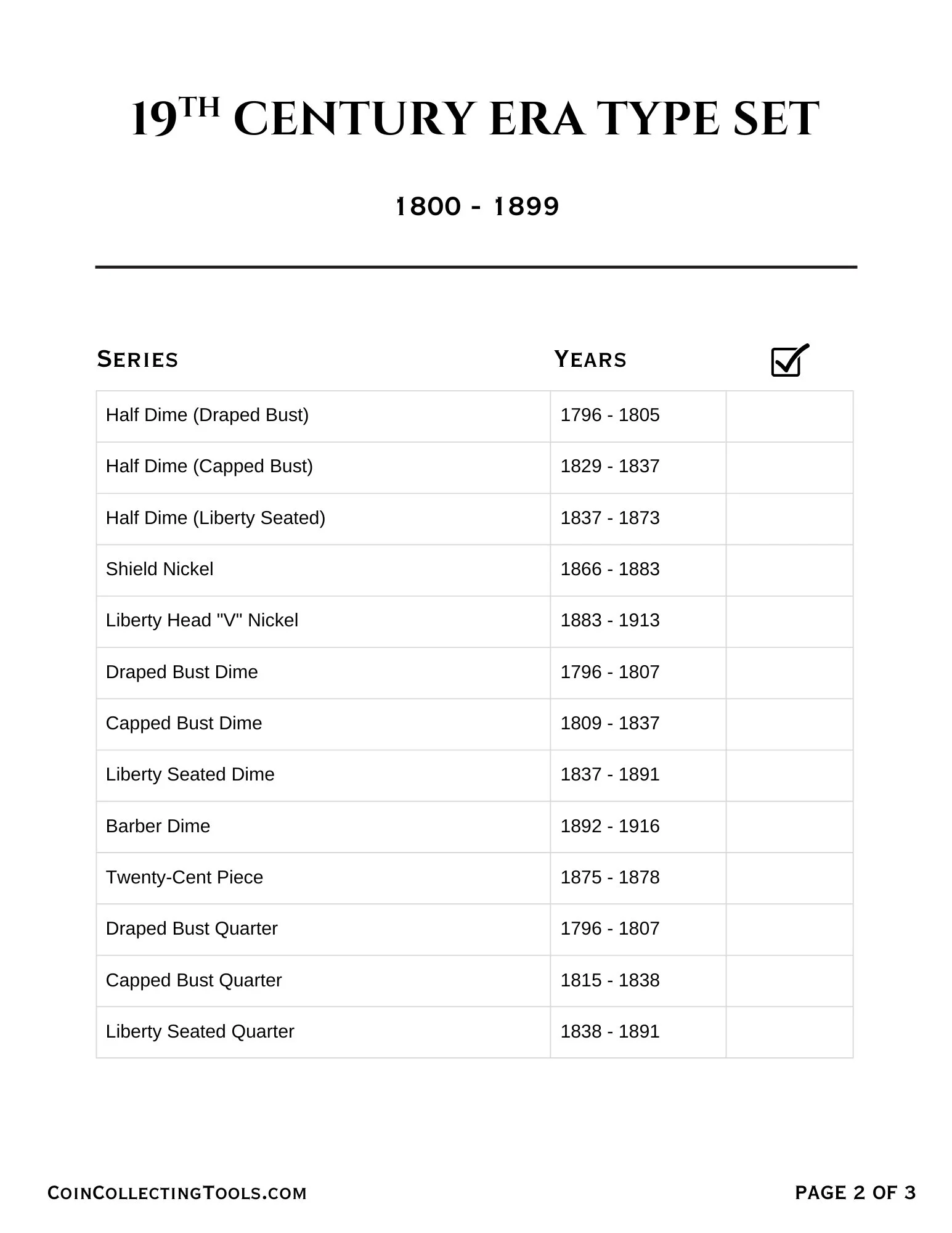
Capped Bust Half-Dimes
(1829 - 1837)
The Capped Bust Half Dime was introduced in 1829 following a long suspension of half dime production. Designed by John Reich and later refined by William Kneass, the obverse features Liberty wearing a soft cap, while the reverse displays a heraldic eagle with shield.
These coins were struck in a 89.24% silver and 10.76% copper composition through 1836. In 1837, the silver standard was adjusted to 90% silver and 10% copper, creating a one-year composition subtype within the series. The 1836–1837 issues also transitioned from the older lettered edge to a reeded edge as part of broader Mint improvements.
Produced only through 1837, the Capped Bust Half Dime represents a short but technically important period in U.S. coinage, bridging early hand-crafted designs with more modern minting standards.

Check out dates & mintages for Capped Bust Half-Dimes, below.Business Strikes
1829 | 1,230,000
1830 | 1,240,000
1831 | 1,242,700
1832 | 965,000
1833 | 1,370,000
1834 | 1,480,000
1835 | 2,760,000
1836 | 1,900,000
1837 | 871,000

How to Find Valuable Banknotes - A Beginner’s Guide to Bank-Strap Hunting
Click here for the full guide