U.S. Ten-Cent Dimes

(1796 - Current)

U.S. Ten-Cent coinage, commonly known as the dime, was first issued in 1796 and has consistently been one of the most widely used denominations in American commerce. Traditionally struck in silver, the dime has featured elegant and influential designs that reflect changing artistic styles and national themes. Despite its small size, the dime has played a major role in U.S. monetary history and remains a popular area of study and collecting within American numismatics.

Check out every series of U.S. Ten-Cent Dime Coins below, complete with dates & mintages for each.

Draped Bust Dime

(1796 - 1807)

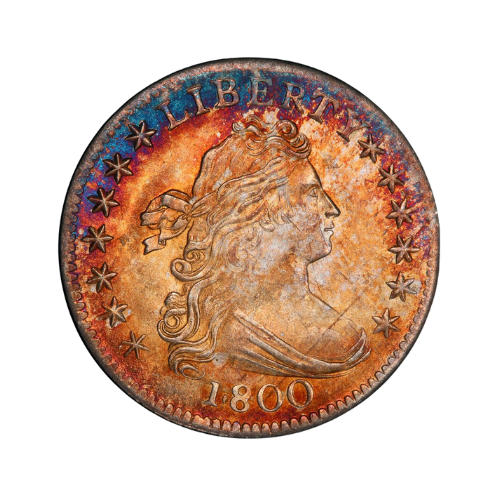
The Draped Bust Dime was first issued in 1796, marking the beginning of regular dime production by the United States Mint. The obverse features Liberty with flowing hair and drapery at the neckline, while the reverse initially displayed a Small Eagle (1796–1797) before transitioning to the Heraldic Eagle design beginning in 1798.

These early dimes were struck in the original federal silver standard of approximately 89.24% silver and 10.76% copper. Mintages were generally low, and production was not continuous during the early years, contributing to the scarcity of certain dates.

Because of their age, limited survival rates, and two distinct reverse types, Draped Bust Dimes are considered foundational pieces in early U.S. silver coinage and are especially desirable in higher grades.

1800 Draped Bust Dime 10C
  • Type 1, Small Eagle

    1796 | 22,135

    1797 | 14,600

    Type 2, Heraldic Eagle

    1800 | 137,450

    1801 | 101,120

    1802 | 136,430

    1803 | 198,060

    1805 | 185,500

    1828 Small Date | 125,000

    1804 | 8,265

    1807 | 165,000

Capped Bust Dime

(1809 - 1837)

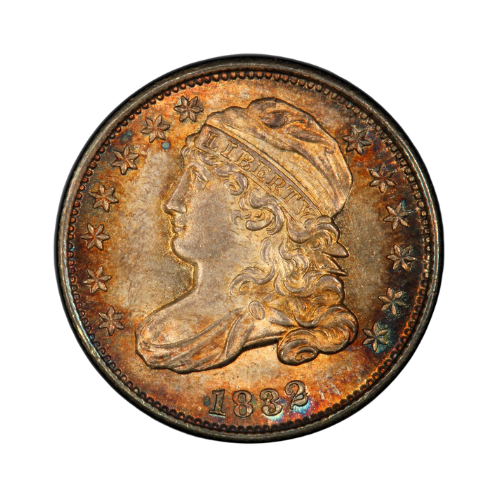
The Capped Bust Dime was introduced in 1809, replacing the Draped Bust design after a brief pause in dime production. Designed by John Reich and later modified by William Kneass, the obverse features Liberty wearing a soft cap, while the reverse displays a heraldic eagle with shield.

From 1809 through 1836, these dimes were struck in the early silver standard of approximately 89.24% silver and 10.76% copper and featured a lettered edge. In 1837, the composition was adjusted to 90% silver and 10% copper, and the edge was changed to reeded, creating a one-year subtype that bridges into the Seated Liberty era.

Capped Bust Dimes are known for numerous die varieties and moderate mintages, making them a popular series for both type collectors and variety specialists.

1832 Capped Bust Dime 10C
  • Type 1, Large Dentils

    1809 | 51,065

    1811 | 65,180

    1814 | 421,500

    1820 | 942,587

    1821 | 1,186,512

    1822 | 100,000

    1823 | 440,000

    1824 | 25,000

    1825 | 26,000

    1827 | 1,215,000

    1828 Large Date | 125,000

    Type 2, Small Dentils

    1829 | 770,000

    1830 | 510,000

    1831 | 771,350

    1832 | 522,500

    1833 | 485,000

    1834 | 635,000

    1835 | 1,410,000

    1836 | 1,190,000

    1837 | 359,500

Seated Liberty Dime

(1837 - 1891)

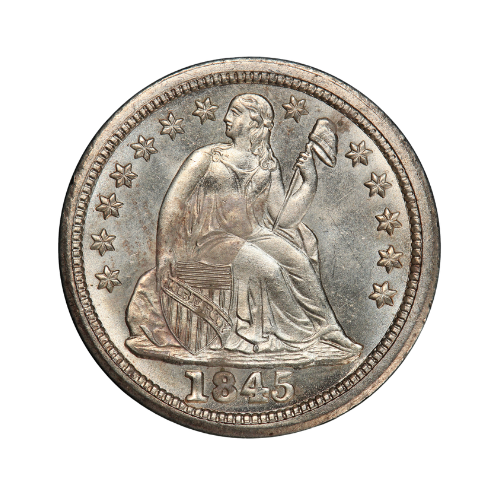
The Seated Liberty Dime was introduced in 1837, replacing the Capped Bust design and beginning one of the longest-running dime series in U.S. history. Designed by Christian Gobrecht, the obverse features Liberty seated on a rock holding a shield and pole, while the reverse displays a wreath encircling the denomination.

Beginning in 1837, the composition was standardized at 90% silver and 10% copper, a silver alloy that remained consistent throughout the series. Over its long production span, several design modifications created collectible subtypes, including the addition of stars to the obverse (1838), arrows at the date in 1853–1855 and again in 1873 to indicate weight changes, and the removal of stars in 1860.

Mintages varied widely, and many later dates saw reduced production as silver coin circulation patterns shifted. With numerous subtypes, Civil War-era issues, and Carson City mintmarks in the later years, the Seated Liberty Dime remains a challenging and historically rich 19th-century series for collectors.

1845 Liberty Seated Dime 10C
  • Type 1, No Stars

    1837 | 682,500

    1838-O | 489,034

    Type 2, No Drapery

    1838 | 406,034

    1839 | 1,002,000

    1839-O | 150,000

    1840 No Drapery | 691,000

    1840-O No Drapery | 290,000

    Type 3, Stars Obverse

    1840 Drapery | 377,500

    1841 | 1,544,000

    1841-O | 405,000

    1842 | 815,000

    1842-O | 300,000

    1843 | 1,410,000

    1843-O | 150,000

    1844 | 72,500

    1844-O | 220,000

    1845 | 1,973,000

    1845-O | 290,000

    1846 | 120,000

    1846-O | 1,200,000

    1847 | 832,500

    1848 | 600,000

    1848-O | 800,000

    1849 | 889,000

    1849-O | 240,000

    1850 | 770,000

    1850-O | 410,000

    1851 | 900,000

    1851-O | 400,000

    1852 | 1,020,000

    1852-O | 430,000

    Type 4, Stars Obverse, Arrows at Date

    1853 Arrows | 12,078,010

    1853-O Arrows | 2,200,000

    1854 Arrows | 2,470,000

    1854-O Arrows | 800,000

    1855 Arrows | 1,570,000

    Type 3, Stars Obverse

    1856 Small Date | 600,000

    1856 Large Date | 2,720,000

    1856-O | 1,000,000

    1857 | 4,250,000

    1857-O | 700,000

    1858 | 4,453,000

    1858-O | 1,120,000

    1859 | 430,000

    1859-O | 360,000

    Type 5, Legend Obverse

    1860 | 778,000

    1860-S | 140,000

    1860-O | 40,000

    1861 | 1,060,000

    1861-S | 172,500

    1861-O | 1,240,000

    1862 | 1,711,000

    1862-S | 180,750

    1863 | 191,600

    1863-S | 157,500

    1864 | 11,000

    1864-S | 230,000

    1865 | 13,000

    1865-S | 175,000

    1866 | 8,000

    1866-S | 135,000

    1867 | 8,000

    1867-S | 140,000

    1868 | 123,000

    1868-S | 260,000

    1869 | 158,000

    1869-S | 450,000

    1870 | 280,000

    1870-S | 50,000

    1871 | 593,000

    1871-S | 320,000

    1871-CC | 20,100

    1872 | 721,500

    1872-S | 190,000

    1872-CC | 35,480

    1873 No Arrows | 2,474,400

    1873-CC No Arrows | 60,000

    Type 6, Legend Obverse, Arrows at Date

    1874 Arrows | 2,558,000

    1874-CC Arrows | 10,817

    1873 Arrows | 2,377,700

    1873-CC Arrows | 18,791

    1873-S Arrows | 455,000

    1874-S Arrows | 240,000

    Type 5, Legend Obverse

    1875 | 10,355,200

    1875-CC | 4,645,000

    1875-S | 3,000,000

    1876 | 9,910,000

    1876-CC | 153,000

    1876-S | 9,820,000

    1877 | 510,000

    1877-CC | 350,000

    1877-S | 880,000

    1878 | 289,000

    1878-CC | 97,000

    1879 | 14,000

    1880 | 36,000

    1881 | 24,000

    1882 | 40,000

    1883 | 43,000

    1884 | 13,600

    1884-S | 564,969

    1885 | 13,600

    1885-S | 43,690

    1886 | 15,000

    1886-S | 206,524

    1887 | 16,875

    1887-S | 4,454,450

    1888 | 15,800

    1888-S | 1,720,000

    1889 | 18,500

    1889-S | 972,678

    1890 | 30,000

    1890-S | 1,423,076

    1891 | 15,000

    1891-S | 3,196,116

    1891-O | 4,540,000

  • Type 3, Stars Obverse

    1858 Proof | 300

    1859 Proof | 800

    Type 5, Legend Obverse

    1860 Proof | 1,000

    1861 Proof | 1,000

    1862 Proof | 550

    1863 Proof | 460

    1864 Proof | 470

    1865 Proof | 500

    1866 Proof | 725

    1867 Proof | 625

    1868 Proof | 600

    1869 Proof | 600

    1870 Proof | 1,000

    1871 Proof | 960

    1872 Proof | 950

    1873 No Arrows Proof | 600

    1874 Arrows Proof | 700

    1875 Proof | 700

    1876 Proof | 1,150

    1877 Proof | 510

    1878 Proof | 800

    1879 Proof | 1,100

    1880 Proof | 1,355

    1881 Proof | 975

    1882 Proof | 1,100

    1883 Proof | 1,039

    1884 Proof | 875

    1885 Proof | 930

    1886 Proof | 886

    1887 Proof | 710

    1888 Proof | 832

    1889 Proof | 711

    1890 Proof | 590

    1891 Proof | 600

    Type 6, Legend Obverse, Arrows at Date

    1873 Arrows Proof | 800

Barber Dime

(1892 - 1916)

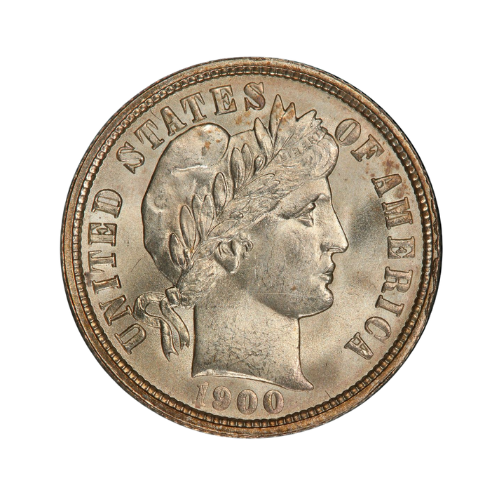
The Barber Dime was introduced in 1892 as part of a broader redesign of U.S. silver coinage. Designed by Charles E. Barber, the obverse features Liberty wearing a Phrygian cap and laurel wreath, while the reverse displays a wreath surrounding the denomination.

These dimes were struck in the standard 90% silver and 10% copper composition throughout the entire series. Produced from 1892 through 1916, they were minted at multiple facilities, including Philadelphia, New Orleans, San Francisco, and later Denver.

While many dates are obtainable in circulated grades, several issues—such as the 1894-S—are famous rarities. The Barber Dime was ultimately replaced in 1916 by the Mercury Dime, but it remains an important bridge between 19th-century and modern U.S. silver coinage.

1900 Barber Dime 10C
  • 1892 | 12,120,000

    1892-O | 3,841,700

    1892-S | 990,710

    1893 | 3,340,000

    1893-O | 1,760,000

    1893-S | 2,491,401

    1894 | 1,330,000

    1894-O | 720,000

    1895 | 690,000

    1895-O | 440,000

    1895-S | 1,120,000

    1896 | 2,000,000

    1896-O | 610,000

    1896-S | 575,056

    1897 | 10,868,533

    1897-O | 666,000

    1897-S | 1,342,844

    1898 | 16,320,000

    1898-O | 2,130,000

    1898-S | 1,702,507

    1899 | 19,850,000

    1899-O | 2,650,000

    1899-S | 1,867,493

    1900 | 17,600,000

    1900-O | 2,010,000

    1900-S | 5,168,270

    1901 | 18,859,665

    1901-O | 5,620,000

    1901-S | 593,022

    1902 | 21,380,000

    1902-O | 4,500,000

    1902-S | 2,070,000

    1903 | 19,500,000

    1903-O | 8,180,000

    1903-S | 613,300

    1904 | 14,600,357

    1904-S | 800,000

    1905 | 14,551,623

    1905-O | 3,400,000

    1905-S | 6,855,199

    1906 | 19,957,731

    1906-D | 4,060,000

    1906-O | 2,610,000

    1906-S | 3,136,640

    1907 | 22,220,000

    1907-D | 4,080,000

    1907-O | 5,058,000

    1907-S | 3,178,470

    1908 | 10,600,000

    1908-D | 7,490,000

    1908-O | 1,789,000

    1908-S | 3,220,000

    1909 | 10,240,000

    1909-D | 954,000

    1909-O | 2,287,000

    1909-S | 1,000,000

    1910 | 11,520,000

    1910-D | 3,490,000

    1910-S | 1,240,000

    1911 | 18,870,000

    1911-D | 11,209,000

    1911-S | 3,520,000

    1912 | 19,349,300

    1912-D | 11,760,000

    1912-S | 3,420,000

    1913 | 19,760,000

    1913-S | 510,000

    1914 | 17,360,230

    1914-D | 11,908,000

    1914-S | 2,100,000

    1915 | 5,620,000

    1915-S | 960,000

    1916 | 18,490,000

    1916-S | 5,820,000

  • 1892 Proof | 1,245

    1893 Proof | 792

    1894 Proof | 972

    1895 Proof | 880

    1896 Proof | 762

    1897 Proof | 731

    1898 Proof | 735

    1899 Proof | 846

    1900 Proof | 912

    1901 Proof | 813

    1902 Proof | 777

    1903 Proof | 755

    1904 Proof | 670

    1905 Proof | 727

    1906 Proof | 675

    1907 Proof | 575

    1908 Proof | 545

    1909 Proof | 650

    1910 Proof | 551

    1911 Proof | 543

    1912 Proof | 700

    1913 Proof | 622

    1914 Proof | 425

    1915 Proof | 450

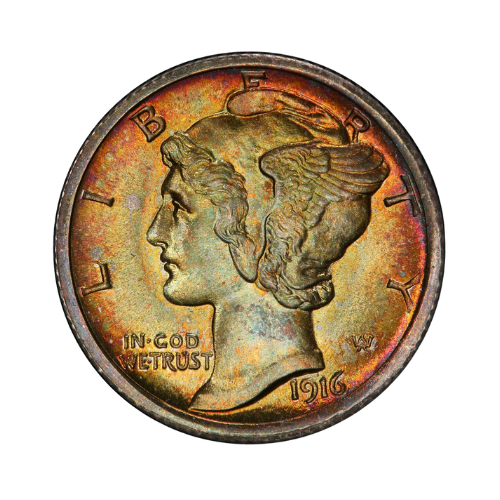
Mercury Dime

(1916 - 1945)

The Mercury Dime, officially known as the Winged Liberty Head Dime, was introduced in 1916, replacing the Barber design. Created by Adolph A. Weinman, the obverse features Liberty wearing a winged cap symbolizing freedom of thought—often mistaken for the Roman god Mercury, which inspired the coin’s popular nickname. The reverse displays a fasces and olive branch, representing strength and peace.

The series was struck from 1916 through 1945 in a consistent 90% silver and 10% copper composition. Minted at Philadelphia, Denver, and San Francisco, the coins saw heavy circulation during the early 20th century.

Key issues include the 1916-D and several notable overdates. Production ended in 1945 following the death of Franklin D. Roosevelt, after which the design was replaced by the Roosevelt Dime in 1946. Today, Mercury Dimes remain one of the most widely collected and visually admired U.S. silver series.

1916-D Mercury Dime 10C
  • 1916 | 22,180,080

    1916-D | 264,000

    1916-S | 10,450,000

    1917 | 55,230,000

    1917-D | 9,402,000

    1917-S | 27,330,000

    1918 | 26,680,000

    1918-D | 22,674,800

    1918-S | 19,300,000

    1919 | 35,740,000

    1919-D | 9,939,000

    1919-S | 8,850,000

    1920 | 59,030,000

    1920-D | 19,171,000

    1920-S | 13,820,000

    1921 | 1,230,000

    1921-D | 1,080,000

    1923 | 50,130,000

    1923-S | 6,440,000

    1924 | 24,010,000

    1924-D | 6,810,000

    1924-S | 7,120,000

    1925 | 25,610,000

    1925-D | 5,117,000

    1925-S | 5,850,000

    1926 | 32,160,000

    1926-D | 6,828,000

    1926-S | 1,520,000

    1927 | 28,080,000

    1927-D | 4,812,000

    1927-S | 4,770,000

    1928 | 19,480,000

    1928-D | 4,161,000

    1928-S | 7,400,000

    1929 | 25,970,000

    1929-D | 5,034,000

    1929-S | 4,730,000

    1930 | 6,770,000

    1930-S | 1,843,000

    1931 | 3,150,000

    1931-D | 1,260,000

    1931-S | 1,800,000

    1934 | 24,080,000

    1934-D | 6,772,000

    1935 | 58,830,000

    1935-D | 10,477,000

    1935-S | 15,840,000

    1936 | 87,500,000

    1936-D | 16,132,000

    1936-S | 9,210,000

    1937 | 56,860,000

    1937-D | 14,146,000

    1937-S | 9,740,000

    1938 | 22,190,000

    1938-D | 5,537,000

    1938-S | 8,090,000

    1939 | 67,740,000

    1939-D | 24,394,000

    1939-S | 10,540,000

    1940 | 65,350,000

    1940-D | 21,198,000

    1940-S | 21,560,000

    1941 | 175,090,000

    1941-D | 45,634,000

    1941-S | 43,090,000

    1942 | 205,410,000

    1942-D | 60,740,000

    1942-S | 49,300,000

    1943 | 191,710,000

    1943-D | 71,949,000

    1943-S | 60,400,000

    1944 | 231,410,000

    1944-D | 62,224,000

    1944-S | 49,490,000

    1945 | 159,130,000

    1945-D | 40,245,000

    1945-S | 41,290,000

  • 1936 Proof | 4,130

    1937 Proof | 5,756

    1938 Proof | 8,728

    1939 Proof | 9,321

    1940 Proof | 11,827

    1941 Proof | 16,557

    1942 Proof | 22,329

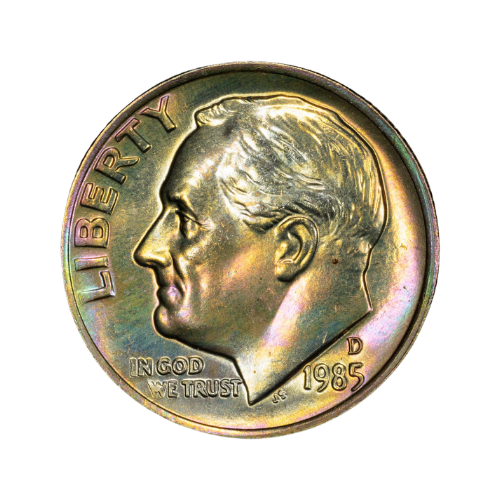
Roosevelt Dime

(1946 - Current)

The Roosevelt Dime was introduced in 1946 to honor Franklin D. Roosevelt following his death in 1945. Designed by John R. Sinnock, the obverse features Roosevelt’s portrait, while the reverse displays a torch flanked by olive and oak branches, symbolizing liberty, peace, and strength.

Silver Composition (1946–1964):
From its introduction through 1964, Roosevelt dimes were struck in the traditional 90% silver and 10% copper alloy. These coins are commonly collected for both their silver content and historical significance.

Clad Composition (1965–Present):
Beginning in 1965, rising silver prices prompted a composition change. Dimes were struck in a copper-nickel clad format consisting of outer layers of 75% copper and 25% nickel bonded to a pure copper core. This composition remains in use today.

Although most Roosevelt dimes are common in circulation, certain early silver issues, proof varieties, and high-grade examples remain desirable. The series continues as one of the longest-running continuous designs in U.S. coinage history.

1950 Silver Roosevelt Dime 10C
  • 1946 | 255,250,000

    1946-D | 61,043,500

    1946-S | 27,900,000

    1947 | 121,520,000

    1947-D | 46,835,000

    1947-S | 34,840,000

    1948 | 74,950,000

    1948-D | 52,841,000

    1948-S | 35,520,000

    1949 | 30,940,000

    1949-D | 26,034,000

    1949-S | 13,510,000

    1950 | 50,130,114

    1950-D | 46,803,000

    1950-S | 20,440,000

    1951 | 103,880,102

    1951-D | 56,529,000

    1951-S | 31,630,000

    1952 | 99,040,093

    1952-D | 122,100,000

    1952-S | 44,419,500

    1953 | 53,490,120

    1953-D | 136,433,000

    1953-S | 39,180,000

    1954 | 114,010,203

    1954-D | 106,397,000

    1954-S | 22,860,000

    1955 | 12,450,181

    1955-D | 13,959,000

    1955-S | 18,510,000

    1956 | 108,640,000

    1956-D | 108,015,100

    1957 | 160,160,000

    1957-D | 113,354,330

    1958 | 31,910,000

    1958-D | 136,564,600

    1959 | 85,780,000

    1959-D | 164,919,790

    1960 | 70,390,000

    1960-D | 200,160,400

    1961 | 93,730,000

    1961-D | 209,146,550

    1962 | 72,450,000

    1962-D | 334,948,380

    1963 | 123,650,000

    1963-D | 421,476,530

    1964 | 929,360,000

    1964-D | 1,357,517,180

  • 1950 Proof | 51,386

    1951 Proof | 57,500

    1952 Proof | 81,980

    1953 Proof | 128,800

    1954 Proof | 233,300

    1955 Proof | 378,200

    1956 Proof | 669,384

    1957 Proof | 1,247,952

    1958 Proof | 875,652

    1959 Proof | 1,149,291

    1960 Proof | 1,691,602

    1961 Proof | 3,028,244

    1962 Proof | 3,218,019

    1963 Proof | 3,075,645

    1964 Proof | 3,950,762

  • 1965 | 1,652,140,570

    1966 | 1,382,734,540

    1967 | 2,244,007,320

    1968 | 424,470,400

    1968-D | 480,748,280

    1969 | 145,790,000

    1969-D | 563,323,870

    1970 | 345,570,000

    1970-D | 754,942,100

    1971 | 162,690,000

    1971-D | 377,914,240

    1972 | 431,540,000

    1972-D | 330,290,000

    1973 | 315,670,000

    1973-D | 455,032,426

    1974 | 470,248,000

    1974-D | 571,083,000

    1975 | 585,673,900

    1975-D | 313,705,300

    1976 | 568,760,000

    1976-D | 695,222,774

    1977 | 796,930,000

    1977-D | 376,607,228

    1978 | 663,980,000

    1978-D | 282,847,540

    1979 | 315,440,000

    1979-D | 390,921,184

    1980-P | 735,170,000

    1980-D | 719,354,321

    1981-P | 676,650,000

    1981-D | 712,284,143

    1982-P | 519,475,000

    1982-D | 542,713,584

    1983-P | 647,025,000

    1983-D | 730,129,224

    1984-P | 856,669,000

    1984-D | 704,803,976

    1985-P | 705,200,962

    1985-D | 587,979,970

    1986-P | 682,649,693

    1986-D | 473,326,970

    1987-P | 762,709,481

    1987-D | 653,203,402

    1988-P | 1,030,550,000

    1988-D | 962,385,489

    1989-P | 1,298,400,000

    1989-D | 896,535,597

    1990-P | 1,034,340,000

    1990-D | 839,995,824

    1991-P | 927,220,000

    1991-D | 601,241,114

    1992-P | 593,500,000

    1992-D | 616,273,932

    1993-P | 766,180,000

    1993-D | 750,110,166

    1994-P | 1,189,000,000

    1994-D | 1,303,268,110

    1995-P | 1,125,500,000

    1995-D | 1,274,890,000

    1996-P | 1,421,163,000

    1996-D | 1,400,300,000

    1996-W | 1,457,000

    1997-P | 991,640,000

    1997-D | 979,810,000

    1998-P | 1,163,000,000

    1998-D | 1,172,250,000

    1999-P | 2,164,000,000

    1999-D | 1,397,750,000

    2000-P | 1,842,500,000

    2000-D | 1,818,700,000

    2001-P | 1,369,590,000

    2001-D | 1,412,800,000

    2002-P | 1,187,500,000

    2002-D | 1,379,500,000

    2003-P | 1,085,500,000

    2003-D | 986,500,000

    2004-P | 1,328,000,000

    2004-D | 1,159,500,000

    2005-P | 1,412,000,000

    2005-D | 1,423,500,000

    2006-P | 1,381,000,000

    2006-D | 1,447,000,000

    2007-P | 391,000,000

    2007-D | 624,500,000

    2008-P | 413,000,000

    2008-D | 637,500,000

    2009-P | 96,500,000

    2009-D | 49,500,000

    2010-P | 557,000,000

    2010-D | 562,000,000

    2011-P | 748,000,000

    2011-D | 754,000,000

    2012-P | 808,000,000

    2012-D | 868,000,000

    2013-P | 1,086,500,000

    2013-D | 1,025,500,000

    2014-P | 1,023,000,000

    2014-D | 1,080,500,000

    2015-P | 1,497,510,000

    2015-D | 1,543,500,000

    2016-P | 1,517,000,000

    2016-D | 1,437,000,000

    2017-P | 1,437,500,000

    2017-D | 1,290,500,000

    2018-P | 1,193,000,000

    2018-D | 1,006,000,000

    2019-P | 1,147,500,000

    2019-D | 1,001,500,000

    2020-P | 1,349,250,000

    2020-D | 1,481,000,000

    2021-P | 1,333,500,000

    2021-D | 1,445,000,000

    2022-P | 1,551,000,000

    2022-D | 1,583,000,000

    2023-P | 1,410,500,000

    2023-D | 1,286,000,000

  • 1965 SMS | 2,360,000

    1966 SMS | 2,261,583

    1967 SMS | 1,863,344

    1968-S Proof | 3,041,506

    1969-S Proof | 2,394,631

    1970-S Proof | 2,632,810

    1971-S Proof | 3,220,733

    1972-S Proof | 3,260,996

    1973-S Proof | 2,760,339

    1974-S Proof | 2,612,568

    1975-S Proof | 2,845,450

    1976-S Proof | 4,149,730

    1977-S Proof | 3,251,152

    1978-S Proof | 3,127,781

    1979-S Proof | 3,677,175

    1980-S Proof | 3,554,806

    1981-S Proof | 4,063,083

    1982-S Proof | 3,857,479

    1983-S Proof | 3,279,126

    1984-S Proof | 3,065,110

    1985-S Proof | 3,362,821

    1986-S Proof | 3,010,497

    1987-S Proof | 4,227,728

    1988-S Proof | 3,262,948

    1989-S Proof | 3,220,194

    1990-S Proof | 3,299,559

    1991-S Proof | 2,867,787

    1992-S Proof | 2,858,981

    1993-S Proof | 2,633,439

    1994-S Proof | 2,484,594

    1995-S Proof | 2,117,496

    1996-S Proof | 1,750,244

    1997-S Proof | 2,055,000

    1998-S Proof | 2,086,507

    1999-S Proof | 2,543,401

    2000-S Proof | 3,082,572

    2001-S Proof | 2,319,766

    2002-S Proof | 2,319,766

    2003-S Proof | 2,172,684

    2004-S Proof | 1,789,488

    2005-S Proof | 2,275,000

    2006-S Proof | 2,000,428

    2007-S Proof | 1,702,116

    2008-S Proof | 1,405,674

    2009-S Proof | 1,482,502

    2010-S Proof | 1,103,815

    2011-S Proof | 1,098,835

    2012-S Proof | 843,705

    2013-S Proof | 856,953

    2014-S Proof | 764,206

    2015-S Proof | 711,872

    2016-S Proof | 641,775

    2017-S Proof | 621,390

    2018-S Proof | 568,804

    2019-S Proof | 649,050

    2020-S Proof | 511,148

    2021-S Proof | 521,826

    2022-S Proof | 400,013

    2023-S Proof | 367,418

    2023-S Proof | TBD

If You Collect U.S. Ten-Cent Dimes, Check Out The ‘All Ten-Cent Dime Designs’ Type Set!

a coin collection checklist showing each major design for US ten-cent 10c dime coins

‘Coin Collecting Tools’ is Going Mobile

StackHub App Monthly Membership StackHub App Monthly Membership
Quick View
StackHub App Monthly Membership
$4.99 every month

StackHub is an excellent tool for coin collectors & precious metals enthusiasts of all levels. Your app subscription will come complete with:

  • 100+ prebuilt collection checklists to choose from

  • Collect graded or ungraded coins, your choice

  • Upload images of your own set to take on the go

  • Precious Metals stack tracking

  • Every coin collecting guide at your fingertips

  • Compatible with mobile & desktop

Click HERE to learn more

*During checkout, please use the email address that you’d like associated with your StackHub account. You will receive an invitation to that email address directly from the platform when your account is ready. Account creation may take up to 12 hours from the time of checkout*

US constitutional silver coins, franklin half dollar, silver quarter, mercury dime

Check Out Our Guide to Identifying U.S. Constitutional Silver Coins

Think you might have silver coins in your pocket change? Learn the quick ways to spot United States Coinage made of silver by date, edge color, weight, and more.

Click HERE for the full guide
a coin roll from the bank with ten cent dimes, the face of a Roosevelt dime on the end

Coin Roll Hunting: What It Is and How to Start

Coin roll hunting is the modern-day treasure hunt for collectors. Learn what it is, how to start, and the best tips for finding silver and rare coins in rolls.

Read More

This site and all of its content was built by collectors for collectors. Join thousands who already trust CoinCollectingTools.com for reliable & accurate information, expert tips, and a connected community on social media. Follow us on YouTube & TikTok @CentsMakeDollars to make sure you never miss a new online resource designed to sharpen your knowledge and collecting strategies.