U.S. $1 Dollar Coins

(1794 - Current)

U.S. One-Dollar coinage was first issued in 1794 and has long represented the highest regularly circulating denomination in American coinage. Over time, the dollar has reflected major shifts in U.S. monetary policy, metal standards, and artistic expression, ranging from early silver issues to modern base-metal and bullion-related designs. While paper currency ultimately replaced the dollar coin in everyday use, the denomination remains one of the most historically significant and widely collected areas of U.S. numismatics.

Check out every series of U.S. Dollar Coins below, complete with dates & mintages for each.

Flowing Hair Dollar

(1794 - 1795)

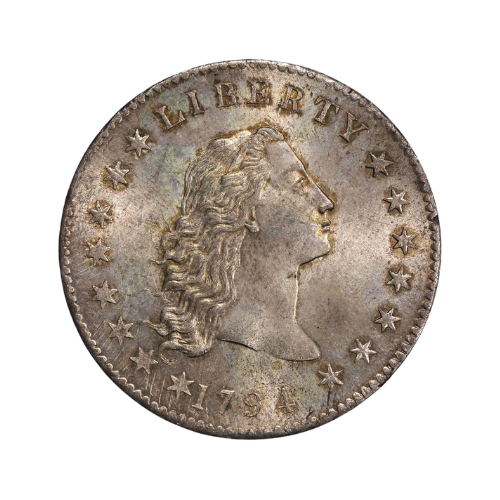
The Flowing Hair Dollar was the first official silver dollar struck by the United States Mint, debuting in 1794. The obverse features Liberty with loose, flowing hair symbolizing freedom, while the reverse displays a small eagle surrounded by a wreath.

These early dollars were struck in the original federal silver standard of approximately 89.24% silver and 10.76% copper, with a weight of 26.96 grams. In 1795, the reverse design transitioned from the Small Eagle to the Heraldic Eagle motif, creating two distinct types within the short-lived series.

Mintages were limited, and surviving examples are scarce, particularly in higher grades. As the nation’s first regular-issue silver dollar, the Flowing Hair Dollar holds foundational importance in American numismatics and remains one of the most coveted early U.S. coin types.

1794 Flowing Hair Dollar $1 both sides of the coin
  • 1794 | 1,758

    1795 | 160,295

Draped Bust Dollar

(1795 - 1804)

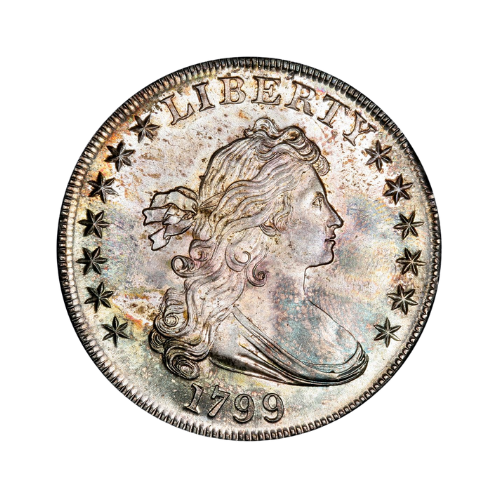
The Draped Bust Dollar succeeded the Flowing Hair design in 1795 and features a more refined portrait of Liberty, attributed to artist Gilbert Stuart and engraved by Robert Scot. The obverse shows Liberty with draped clothing and flowing hair, while the reverse initially displayed a Small Eagle (1795–1798) before transitioning to the Heraldic Eagle design later in 1798.

These dollars were struck in approximately 89.24% silver and 10.76% copper, weighing 26.96 grams. Production ended after 1804, although famous 1804-dated dollars were actually struck decades later as diplomatic presentation pieces, creating one of the most well-known rarities in U.S. coinage.

With multiple reverse types and historic significance, Draped Bust Dollars remain cornerstone pieces of early American silver coinage and are highly prized in all grades.

1799 Draped Bust Dollar $1 both sides of the coin eagle and liberty
  • Type 1, Small Eagle

    1795 | 42,738

    1796 | 79,920

    1797 | 7,776

    1798 Small Eagle | 327,536

    Type 2, Heraldic Eagle

    1799 | 423,515

    1800 | 220,920

    1801 | 54,454

    1802 | 41,650

    1803 | 85,634

Seated Liberty Dollar

(1837 - 1873)

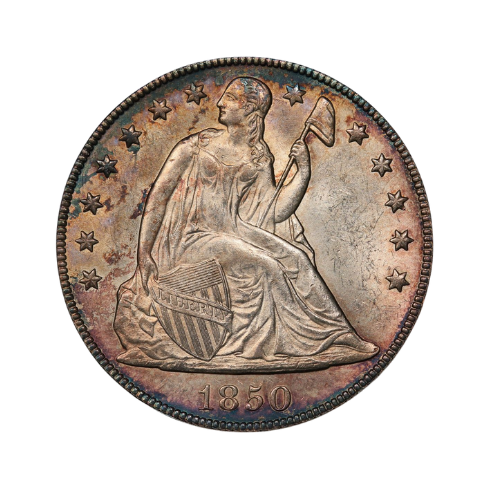
The Seated Liberty Dollar was introduced in 1840, marking the return of regular silver dollar production after a long hiatus following the Draped Bust series. Designed by Christian Gobrecht, the obverse features Liberty seated on a rock holding a shield and liberty pole, while the reverse displays a heraldic eagle with shield.

These dollars were struck in the standardized 90% silver and 10% copper composition, weighing 26.73 grams. Over its production span, the series saw several modifications, including the addition of the motto “IN GOD WE TRUST” to the reverse beginning in 1866.

Mintages were often limited, as many silver dollars were exported or melted. Carson City issues from the early 1870s are particularly popular with collectors. Production ended in 1873 with the passage of the Coinage Act of 1873, making the Seated Liberty Dollar the final regular-issue silver dollar before the introduction of the Trade Dollar.

1850 Seated Liberty Dollar $1 both sides of the coin eagle and seated liberty
  • Type 1, No Motto

    1840 | 61,005

    1841 | 173,000

    1842 | 184,618

    1843 | 165,100

    1844 | 20,000

    1845 | 24,500

    1846 | 110,600

    1846-O | 59,000

    1847 | 140,750

    1848 | 15,000

    1849 | 62,600

    1850 | 7,500

    1850-O | 40,000

    1851 | 1,300

    1852 | 1,100

    1853 | 46,110

    1854 | 33,140

    1855 | 26,000

    1856 | 63,500

    1857 | 94,000

    1859 | 255,700

    1859-O | 360,000

    1859-S | 20,000

    1860 | 217,600

    1860-O | 515,000

    1861 | 77,500

    1862 | 11,540

    1863 | 27,200

    1864 | 30,700

    1865 | 46,500

    Type 2, With Motto

    1866 | 48,900

    1867 | 46,900

    1868 | 162,100

    1869 | 423,700

    1870 | 415,000

    1870-CC | 11,758

    1870-S | 12

    1871 | 1,073,800

    1871-CC | 1,376

    1872 | 1,105,500

    1872-CC | 3,150

    1872-S | 9,000

    1873 | 293,000

    1873-CC | 2,300

    1873-S | 700

  • Type 1, No Motto

    1858 Proof | 210

    1859 Proof | 800

    1860 Proof | 1,330

    1861 Proof | 1,000

    1862 Proof | 550

    1863 Proof | 460

    1864 Proof | 470

    1865 Proof | 500

    1866 No Motto Proof | 725

    Type 2, With Motto

    1866 With Motto Proof | 725

    1867 Proof | 625

    1868 Proof | 600

    1869 Proof | 600

    1870 Proof | 1,000

    1871 Proof | 960

    1872 Proof | 950

    1873 Proof | 600

    1858 Proof | 300

Trade Dollar

(1837 - 1885)

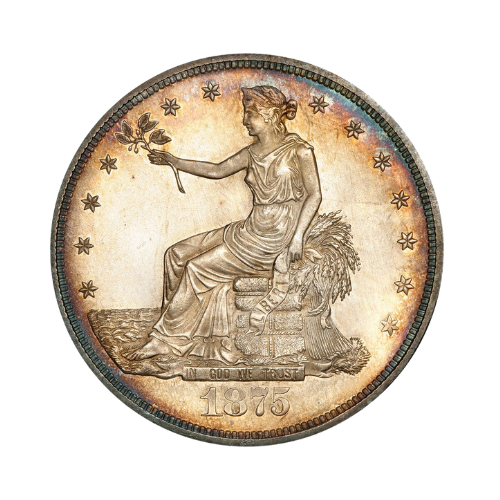
The Trade Dollar was introduced in 1873 to facilitate commerce with Asia, particularly China, where silver coins were valued by weight. Designed by William Barber, the obverse features Liberty seated facing left, extending an olive branch toward the ocean, symbolizing trade. The reverse displays a heraldic eagle with shield.

Trade Dollars were struck in 90% silver and 10% copper but weighed slightly more than standard silver dollars at 27.22 grams to compete with foreign trade coins. Although initially intended primarily for export, they later circulated domestically, where fluctuating silver prices led to financial complications and eventual loss of legal tender status in 1876 (except for limited uses).

Regular business strikes ended in 1878, though proof-only issues were produced from 1879 through 1885, with the final two years being major rarities. Due to their unique purpose, heavier weight, and complex history, Trade Dollars occupy a distinctive place in U.S. numismatics.

1875-CC Trade Dollar $1 both sides of the coin eagle and detailed seated liberty
  • 1873 | 396,635

    1874 | 1,294,000

    1875 | 4,487,000

    1876 | 2,606,000

    1877 | 1,312,000

    1878 | 4,162,000

  • 1873 Proof | 865

    1874 Proof | 700

    1875 Proof | 700

    1876 Proof | 1,150

    1877 Proof | 510

    1878 Proof | 900

    1879 Proof | 1,541

    1880 Proof | 1,987

    1881 Proof | 960

    1882 Proof | 1,097

    1883 Proof | 979

    1884 Proof | 10

    1885 Proof | 5

Morgan Dollar

(1878 - 1921)

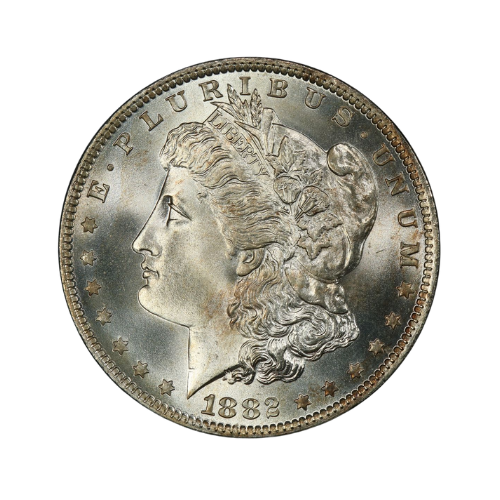
The Morgan Dollar was introduced in 1878 following the Bland–Allison Act, which required the U.S. government to purchase large quantities of silver for coinage. Designed by George T. Morgan, the obverse features a left-facing portrait of Liberty modeled after Anna Willess Williams, while the reverse displays a heraldic eagle with outstretched wings.

Morgan Dollars were struck in 90% silver and 10% copper, weighing 26.73 grams. Minted at Philadelphia, New Orleans, San Francisco, Carson City, and later Denver (in 1921), the series includes numerous popular dates and mintmarks. Carson City issues in particular are highly sought after.

Production initially ran from 1878 to 1904, then resumed for a final year in 1921 before transitioning to the Peace Dollar. Many Morgan Dollars were stored in Treasury vaults for decades and later released, contributing to their widespread availability today. Their large size, silver content, and classic Old West association make them one of the most collected U.S. coin series.

1888-O Morgan Dollar $1 famous key date dollar coin
  • 1878 8 Tail Feathers | 749,500

    1878 7 Tail Feathers | 9,759,300

    1878-CC | 2,212,000

    1878-S | 9,774,000

    1879 | 14,806,000

    1879-CC | 756,000

    1879-O | 2,887,000

    1879-S | 9,110,000

    1880 | 12,600,000

    1880-CC | 591,000

    1880-O | 5,305,000

    1880-S | 8,900,000

    1881 | 9,163,000

    1881-CC | 296,000

    1881-O | 5,708,000

    1881-S | 12,760,000

    1882 | 11,100,000

    1882-CC | 1,133,000

    1882-O | 6,090,000

    1882-S | 9,250,000

    1883 | 12,290,000

    1883-CC | 1,204,000

    1883-O | 8,725,000

    1883-S | 6,250,000

    1884 | 14,070,000

    1884-CC | 1,136,000

    1884-O | 9,730,000

    1884-S | 3,200,000

    1885 | 17,787,000

    1885-CC | 238,000

    1885-O | 9,185,000

    1885-S | 1,497,000

    1886 | 19,963,000

    1886-O | 10,710,000

    1886-S | 750,000

    1887 | 20,290,000

    1887-O | 11,550,000

    1887-S | 1,771,000

    1888 | 19,183,000

    1888-O | 12,150,000

    1888-S | 657,000

    1889 | 21,726,000

    1889-CC | 350,000

    1889-O | 11,875,000

    1889-S | 700,000

    1890 | 16,802,000

    1890-CC | 2,309,041

    1890-O | 10,701,000

    1890-S | 8,230,373

    1891 | 8,693,556

    1891-CC | 1,618,000

    1891-O | 7,954,529

    1891-S | 5,296,000

    1892 | 1,036,000

    1892-CC | 1,352,000

    1892-O | 2,744,000

    1892-S | 1,200,000

    1893 | 378,000

    1893-CC | 677,000

    1893-O | 300,000

    1893-S | 100,000

    1894 | 110,000

    1894-O | 1,723,000

    1894-S | 1,260,000

    1895-O | 450,000

    1895-S | 400,000

    1896 | 9,976,000

    1896-O | 4,900,000

    1896-S | 5,000,000

    1897 | 2,822,000

    1897-O | 4,004,000

    1897-S | 5,825,000

    1898 | 5,884,000

    1898-O | 4,440,000

    1898-S | 4,102,000

    1899 | 330,000

    1899-O | 12,290,000

    1899-S | 2,562,000

    1900 | 8,830,000

    1900-O | 12,590,000

    1900-S | 3,540,000

    1901 | 6,962,000

    1901-O | 13,320,000

    1901-S | 2,284,000

    1902 | 7,994,000

    1902-O | 8,636,000

    1902-S | 1,530,000

    1903 | 4,652,000

    1903-O | 4,450,000

    1903-S | 1,241,000

    1904 | 2,788,000

    1904-O | 3,720,000

    1904-S | 2,304,000

    1921 | 44,690,000

    1921-D | 20,345,000

    1921-S | 21,695,000

  • 1878 Proof 8 Tail Feathers | 500

    1878 Proof 7 Tail Feathers | 250

    1879 Proof | 1,100

    1879-O Proof | 45,755

    1880 Proof | 1,355

    1881 Proof | 984

    1882 Proof | 1,100

    1883 Proof | 1,039

    1884 Proof | 875

    1885 Proof | 930

    1886 Proof | 886

    1887 Proof | 710

    1888 Proof | 833

    1889 Proof | 811

    1890 Proof | 590

    1891 Proof | 650

    1892 Proof | 1,245

    1893 Proof | 792

    1894 Proof | 972

    1895 Proof | 880

    1896 Proof | 762

    1897 Proof | 731

    1898 Proof | 735

    1899 Proof | 846

    1900 Proof | 912

    1901 Proof | 813

    1902 Proof | 777

    1903 Proof | 755

    1904 Proof | 650

Peace Dollar

(1921 - 1935)

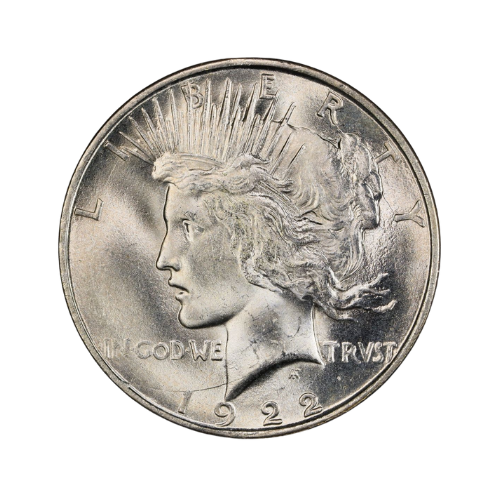
The Peace Dollar was introduced in late 1921 to commemorate the end of World War I and symbolize a new era of peace. Designed by Anthony de Francisci, the obverse features a radiant portrait of Liberty inspired by his wife, Teresa, while the reverse depicts a perched eagle resting on a rock with the word “PEACE” prominently inscribed below.

Peace Dollars were struck in 90% silver and 10% copper, weighing 26.73 grams—the same standard as the Morgan Dollar. The initial 1921 issue was struck in high relief, creating striking detail but production challenges; beginning in 1922, the design was modified to lower relief for easier minting.

Produced through 1935 at Philadelphia, Denver, and San Francisco, the series includes several better dates, such as the 1928 (Philadelphia). As the final circulating 90% silver dollar of the classic era, the Peace Dollar remains a popular and historically significant series among collectors.

1922-D Peace Dollar $1 large bust of liberty and eagle looking back
  • 1921 High Relief | 1,006,473

    1922 High Relief | 35,401

    1922 | 51,737,000

    1922-D | 15,063,000

    1922-S | 17,475,000

    1923 | 30,800,000

    1923-D | 6,811,000

    1923-S | 19,020,000

    1924 | 11,811,000

    1924-S | 1,728,000

    1925 | 10,198,000

    1925-S | 1,610,000

    1926 | 1,939,000

    1926-D | 2,348,700

    1926-S | 6,980,000

    1927 | 848,000

    1927-D | 1,268,900

    1927-S | 866,000

    1928 | 360,649

    1928-S | 1,632,000

    1934 | 954,057

    1934-D | 1,569,500

    1934-S | 1,011,000

    1935 | 1,576,000

    1935-S | 1,964,000

If You Collect U.S. $1 Dollar Coins, Check Out The ‘All Dollar Coin Designs’ Type Set!

a coin collection checklist showing all major designs of US $1 Dollar Coins

‘Coin Collecting Tools’ is Going Mobile

StackHub App Monthly Membership StackHub App Monthly Membership
Quick View
StackHub App Monthly Membership
$4.99 every month

StackHub is an excellent tool for coin collectors & precious metals enthusiasts of all levels. Your app subscription will come complete with:

  • 100+ prebuilt collection checklists to choose from

  • Collect graded or ungraded coins, your choice

  • Upload images of your own set to take on the go

  • Precious Metals stack tracking

  • Every coin collecting guide at your fingertips

  • Compatible with mobile & desktop

Click HERE to learn more

*During checkout, please use the email address that you’d like associated with your StackHub account. You will receive an invitation to that email address directly from the platform when your account is ready. Account creation may take up to 12 hours from the time of checkout*

Two silver coins, one showing Lady Liberty holding a torch and an olive branch, with the year 2006, and the other displaying a heraldic eagle with a shield, olive branch, and arrows, surrounded by stars and inscriptions indicating it is a one-dollar coin from the United States.

Understanding Proof Coins - The Essential Guide

Proof coins are some of the most beautiful coins ever made. Learn the difference between proof, cameo, and deep cameo coins — and why collectors value them.

Click here for the full guide
a coin collector organizing his collection binder

How to Store Collectable Coins Properly

Improper storage can ruin a coin’s value. Learn the best ways to protect your collection from scratches, spots, and unwanted toning with safe holders and tips.

Read More

This site and all of its content was built by collectors for collectors. Join thousands who already trust CoinCollectingTools.com for reliable & accurate information, expert tips, and a connected community on social media. Follow us on YouTube & TikTok @CentsMakeDollars to make sure you never miss a new online resource designed to sharpen your knowledge and collecting strategies.