U.S. Half-Dollar Coins

(1794 - Current)

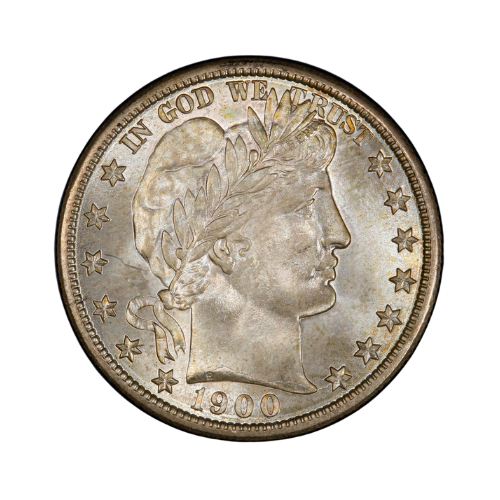
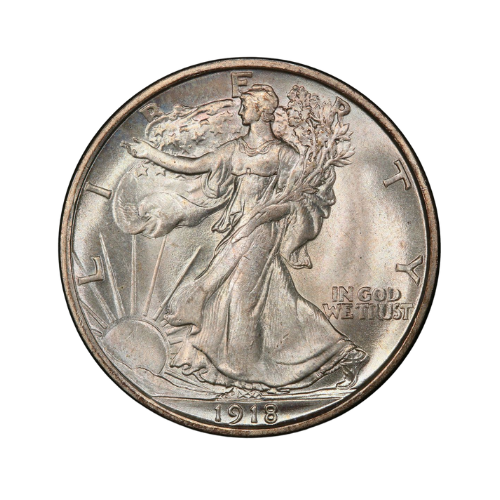
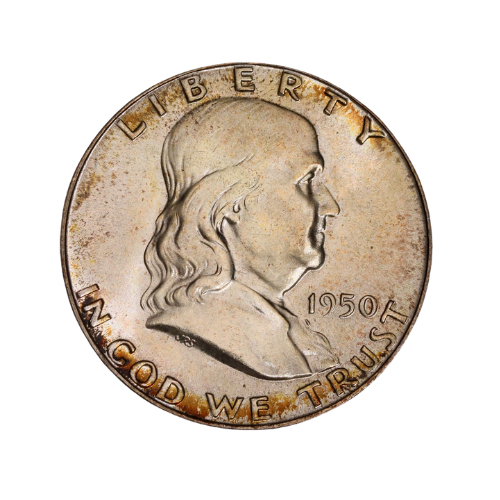
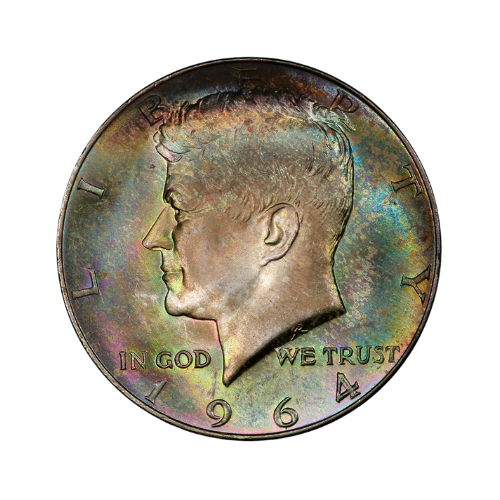
U.S. Fifty-Cent coinage, commonly known as the half-dollar, was first issued in 1794 and has played a prominent role in American commerce and coin design for over two centuries. Traditionally struck in silver, the denomination has showcased some of the most celebrated designs in U.S. numismatics, reflecting national ideals, artistic movements, and changing monetary standards. While no longer widely used in everyday transactions, the half dollar remains a cornerstone of U.S. coin collecting and a symbol of America’s rich numismatic heritage.

Check out every series of U.S. Half-Dollar Coins below, complete with dates & mintages for each.

Flowing Hair Half-Dollar

(1794 - 1795)

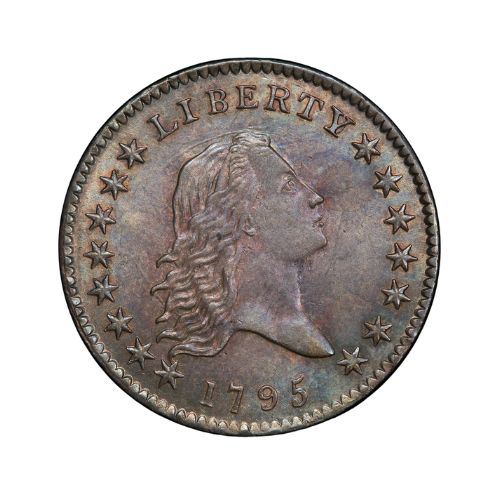
The Flowing Hair Half Dollar was among the first silver denominations struck by the United States Mint, debuting in 1794. The obverse features Liberty with loose, flowing hair—symbolizing freedom—while the reverse displays a small eagle encircled by a wreath.

These early half dollars were struck in 89.24% silver and 10.76% copper, with a weight of approximately 13.48 grams. In 1795, the reverse transitioned from the Small Eagle design to the Heraldic Eagle motif, marking an important subtype within the short two-year series.

As one of the earliest federal silver issues, Flowing Hair half dollars are highly significant historically and are scarce in all grades today.

1795 Flowing Hair 50C Half Dollar
  • 1794 | 23,464

    1795 | 299,680

Draped Bust Half-Dollar

(1796 - 1807)

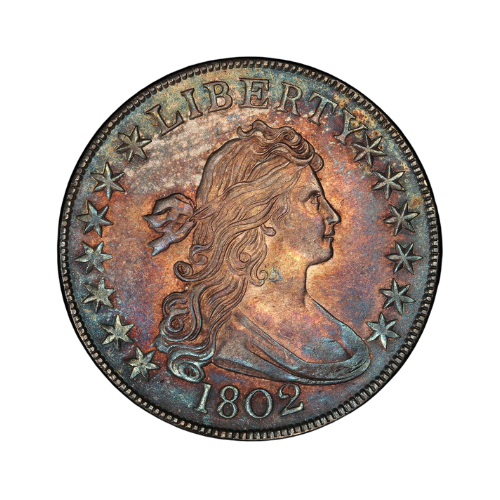
The Draped Bust Half Dollar succeeded the Flowing Hair design and features a more refined portrait of Liberty attributed to artist Gilbert Stuart, with engraving work by Robert Scot. The obverse presents Liberty with draped clothing and flowing hair, while the reverse initially displayed a Small Eagle (1796–1797) before transitioning to the Heraldic Eagle design (1798–1807).

These coins were struck in 89.24% silver and 10.76% copper, weighing approximately 13.48 grams. In 1837, the standard silver fineness was later adjusted across U.S. coinage, but Draped Bust halves retain the earlier composition.

The 1796 issue is a key date due to its limited mintage, and early varieties within the series are avidly collected. As a short-lived early federal type, Draped Bust half dollars remain historically important and scarce in higher grades.

1802 Draped Bust 50C Half Dollar
  • Type 1, Small Eagle

    1796 | 1,500

    1797 | 2,418

    Type 2, Large Eagle

    1801 | 30,289

    1802 | 29,890

    1803 | 188,234

    1805 | 211,722

    1806 | 839,576

    1807 | 301,076

Capped Bust Half-Dollar

(1807 - 1839)

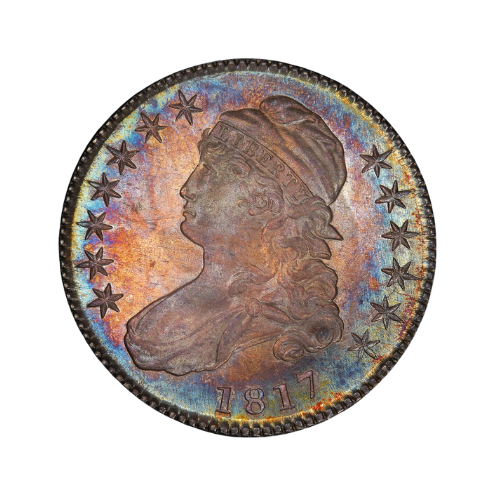
The Capped Bust Half Dollar replaced the Draped Bust design in 1807, featuring Liberty wearing a soft cap inscribed “LIBERTY.” The design was created by John Reich, a German-born assistant engraver at the U.S. Mint. The reverse displays a heraldic eagle with shield, olive branch, and arrows.

From 1807 to 1836, these halves were struck in 89.24% silver and 10.76% copper, weighing approximately 13.48 grams. In 1836, improved steam-powered presses were introduced, and beginning in 1837 the composition was adjusted to 90% silver and 10% copper, with a slightly reduced weight of 13.36 grams. The later issues (1836–1839) are known as the Reeded Edge type, while earlier coins feature a lettered edge reading “FIFTY CENTS OR HALF A DOLLAR.”

Capped Bust halves are popular with both type collectors and variety specialists, especially those studying die marriages cataloged by Overton numbers. Earlier dates and certain varieties carry strong premiums, particularly in higher grades.

1817 Capped Bust 50C Half Dollar
  • Type 1, Lettered Edge

    1807 | 750,500

    1808 | 1,368,600

    1809 | 1,405,810

    1810 | 1,276,276

    1811 | 1,203,644

    1812 | 1,628,059

    1813 | 1,241,903

    1814 | 1,039,075

    1815 | 47,150

    1817 | 1,215,567

    1818 | 1,960,322

    1819 | 2,208,000

    1820 | 751,122

    1821 | 1,305,797

    1822 | 1,559,573

    1823 | 1,694,200

    1824 | 3,504,954

    1825 | 2,943,166

    1825 | 2,943,166

    1826 | 4,004,180

    1827 | 5,493,400

    1828 | 3,075,200

    1829 | 3,712,156

    1830 | 4,764,800

    1831 | 5,873,660

    1832 | 4,797,000

    1833 | 5,206,000

    1834 | 6,412,004

    1835 | 5,352,006

    1836, Lettered Edge | 6,545,000

    Type 2, Reeded Edge, "50 CENTS" on Reverse

    1836, Reeded Edge | 1,200

    1837 | 3,629,820

    1838 | 3,546,000

    1838-O | 20

    1839 | 1,392,976

    1839-O | 178,976

Seated Liberty Half-Dollar

(1839 - 1891)

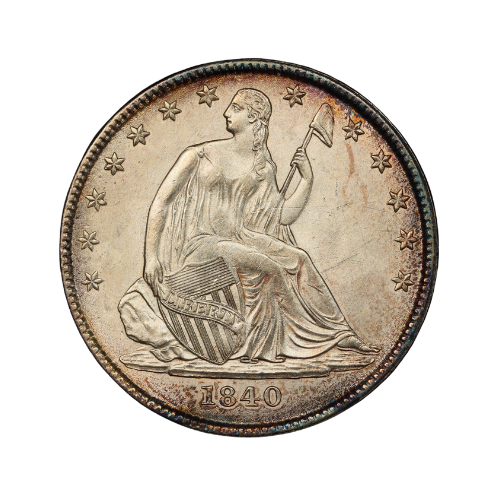
The Seated Liberty Half Dollar debuted in 1839, featuring Liberty seated on a rock holding a shield and pole topped with a liberty cap. The design was created by Christian Gobrecht. The reverse displays a heraldic eagle with shield, olive branch, and arrows, similar in concept to earlier silver denominations.

All Seated Liberty halves were struck in 90% silver and 10% copper, weighing 13.36 grams after the 1837 weight adjustment. Over its long run, the series underwent several design modifications, including the addition of drapery at Liberty’s elbow (added in 1840), arrows at the date in 1853–1855 to denote a slight weight reduction, and the motto “IN GOD WE TRUST,” which first appeared on the reverse in 1866 following the Civil War.

This series includes numerous key and semi-key dates, branch mint issues (notably from New Orleans, San Francisco, and Carson City), and popular varieties. Many pieces saw heavy circulation, making higher-grade examples especially desirable to collectors.

1840-O Seated Liberty 50C Half Dollar
  • Type 1, No Drapery

    1839 No Drapery | 100,000

    Type 2, No Motto

    1839 Drapery | 1,872,400

    1840 | 1,008,600

    1840-O | 855,100

    1841 | 1,124,000

    1841-O | 401,000

    1842 | 2,390,000

    1842-O | 754,000

    1843 | 2,799,000

    1843-O | 2,268,000

    1844 | 2,144,000

    1844-O | 2,005,000

    1845 | 2,332,000

    1845-O | 2,094,000

    1846 | 2,890,000

    1846-O | 2,304,000

    1847 | 2,890,000

    1847-O | 2,584,000

    1848 | 2,440,000

    1848-O | 3,180,000

    1849 | 2,410,000

    1849-O | 2,310,000

    1850 | 2,232,000

    1850-O | 2,456,000

    1851 | 200,750

    1851-O | 402,000

    1852 | 77,130

    1852-O | 144,000

    Type 3, Arrows & Rays

    1853 Arrows & Rays | 3,532,708

    1853-O Arrows & Rays | 1,328,000

    Type 4, No Motto, Arrows at Date

    1854 Arrows | 4,060,000

    1854-O Arrows | 5,240,000

    1855 Arrows | 3,480,000

    1855-O Arrows | 3,688,000

    1855-S Arrows | 129,950

    Type 2, No Motto

    1856 | 4,320,000

    1856-O | 2,658,000

    1856-S | 211,000

    1857 | 4,580,000

    1857-O | 818,000

    1857-S | 158,000

    1858 | 3,500,000

    1858-O | 7,294,000

    1858-S | 476,000

    1859 | 7,360,000

    1859-O | 2,834,000

    1859-S | 566,000

    1860 | 6,300,000

    1860-O | 1,290,000

    1860-S | 472,000

    1861 | 4,840,000

    1861-O | 2,532,633

    1861-S | 939,500

    1862 | 1,580,000

    1862-S | 1,352,000

    1863 | 1,100,000

    1863-S | 916,000

    1864 | 379,000

    1864-S | 658,000

    1865 | 501,000

    1865-S | 675,000

    1866 No Motto | 9,900

    1866-S No Motto | 60,000

    Type 5, With Motto

    1866 With Motto | 780,000

    1866-S Motto | 994,000

    1867 | 865,000

    1867-S | 1,196,000

    1868 | 290,000

    1868-S | 1,160,000

    1869 | 417,600

    1869-S | 656,000

    1870 | 507,600

    1870-CC | 54,617

    1870-S | 1,004,000

    1871 | 384,600

    1871-CC | 153,950

    1871-S | 2,178,000

    1872 | 980,000

    1872-CC | 257,000

    1872-S | 580,000

    1873 (No Arrows) | 543,400

    1873-CC No Arrows | 122,500

    Type 6, With Motto, Arrows at Date

    1873 Arrows | 1,228,000

    1873-CC Arrows | 214,560

    1873-S Arrows | 228,000

    1874 Arrows | 2,359,600

    1874-CC Arrows | 59,000

    1874-S Arrows | 394,000

    Type 5, With Motto

    1875 | 3,700,000

    1875-CC | 1,008,000

    1875-S | 3,200,000

    1876 | 3,470,000

    1876-CC | 1,956,000

    1876-S | 4,528,000

    1877 | 5,100,000

    1877-CC | 1,420,000

    1877-S | 5,356,000

    1878 | 2,130,000

    1878-CC | 62,000

    1879 | 1,100,000

    1880 | 2,133,000

    1881 | 1,000,000

    1882 | 2,380,000

    1883 | 3,100,000

    1884 | 3,200,000

    1885 | 3,200,000

    1886 | 3,940,000

    1887 | 5,100,000

    1888 | 4,950,000

    1889 | 5,650,000

    1890 | 5,800,000

    1891 | 5,300,000

  • Type 2, No Motto

    1858 Proof | 300

    1859 Proof | 800

    1860 Proof | 1,000

    1861 Proof | 1,000

    1862 Proof | 550

    1863 Proof | 460

    1864 Proof | 470

    1865 Proof | 500

    Type 5, With Motto

    1866 Motto Proof | 725

    1867 Proof | 625

    1868 Proof | 600

    1869 Proof | 600

    1870 Proof | 1,000

    1871 Proof | 960

    1872 Proof | 950

    1873 No Arrows Proof | 600

    Type 6, With Motto, Arrows at Date

    1873 Arrows Proof | 500

    1874 Arrows Proof | 700

    Type 5, With Motto

    1875 Proof | 700

    1876 Proof | 1,150

    1877 Proof | 510

    1878 Proof | 800

    1879 Proof | 1,100

    1880 Proof | 1,355

    1881 Proof | 975

    1882 Proof | 1,100

    1883 Proof | 1,039

    1884 Proof | 875

    1885 Proof | 930

    1886 Proof | 886

    1887 Proof | 710

    1888 Proof | 832

    1889 Proof | 711

    1890 Proof | 590

    1891 Proof | 600

If You Collect U.S. Half-Dollar Coins, Check Out The ‘U.S. 20th Century’ Type Set!

a coin collection checklist showing major coin designs from the 20th century United States of America

‘Coin Collecting Tools’ is Going Mobile

StackHub App Monthly Membership StackHub App Monthly Membership
Quick View
StackHub App Monthly Membership
$4.99 every month

StackHub is an excellent tool for coin collectors & precious metals enthusiasts of all levels. Your app subscription will come complete with:

  • 100+ prebuilt collection checklists to choose from

  • Collect graded or ungraded coins, your choice

  • Upload images of your own set to take on the go

  • Precious Metals stack tracking

  • Every coin collecting guide at your fingertips

  • Compatible with mobile & desktop

Click HERE to learn more

*During checkout, please use the email address that you’d like associated with your StackHub account. You will receive an invitation to that email address directly from the platform when your account is ready. Account creation may take up to 12 hours from the time of checkout*

US constitutional silver coins, franklin half dollar, silver quarter, mercury dime

Check Out Our Guide to Identifying U.S. Constitutional Silver Coins

Think you might have silver coins in your pocket change? Learn the quick ways to spot United States Coinage made of silver by date, edge color, weight, and more.

Click HERE for the full guide
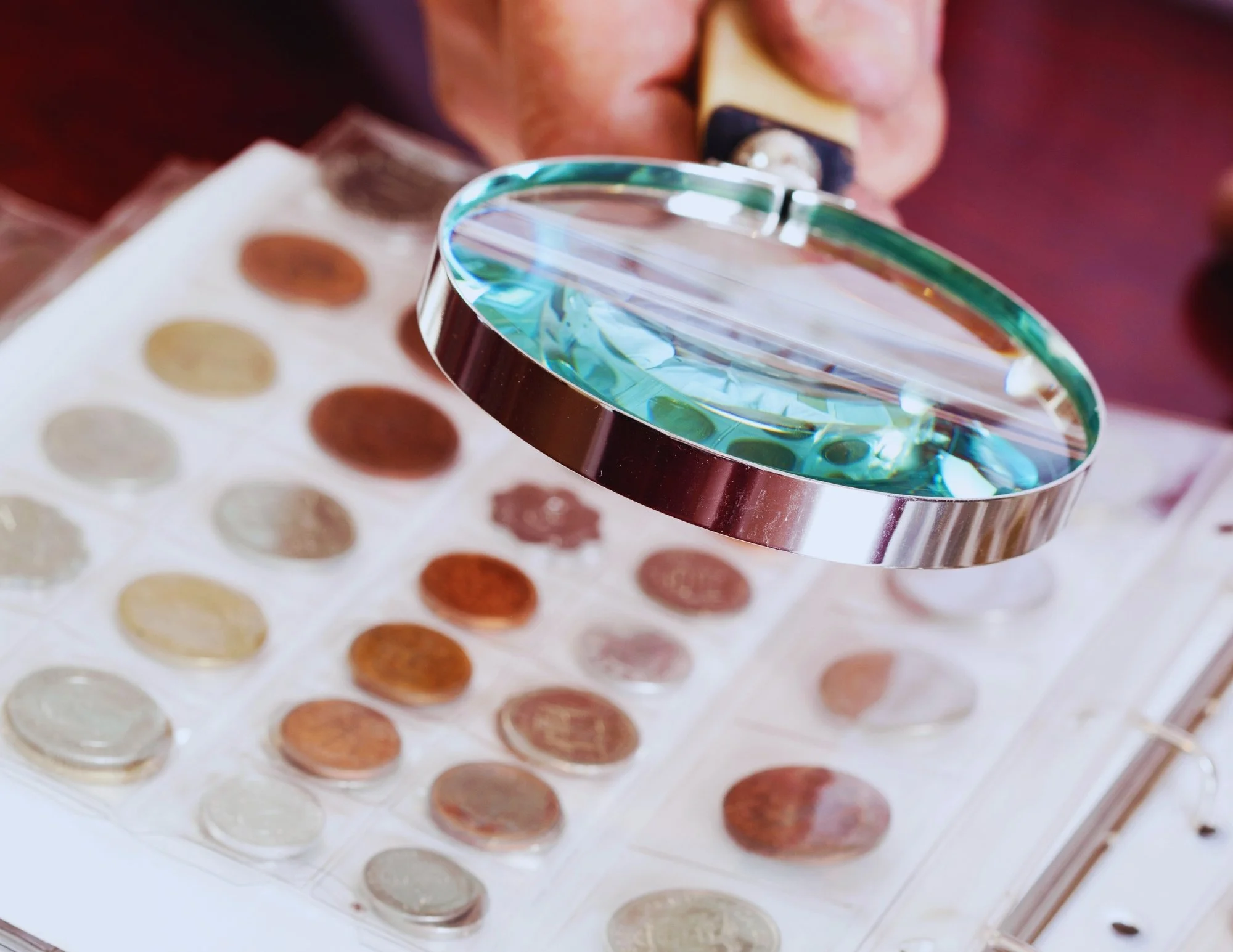
looking at a coin collection binder through a magnifying glass

What is a Type Set in Coin Collecting?

A type set is one of the most exciting and customizable ways to collect coins — instead of hunting every date and mint mark, you collect one example of each major design. It’s a perfect mix of variety, history, and flexibility. Whether you focus on U.S. coins, world coins, or just one denomination, type sets can fit any budget and skill level.

Read More

This site and all of its content was built by collectors for collectors. Join thousands who already trust CoinCollectingTools.com for reliable & accurate information, expert tips, and a connected community on social media. Follow us on YouTube & TikTok @CentsMakeDollars to make sure you never miss a new online resource designed to sharpen your knowledge and collecting strategies.